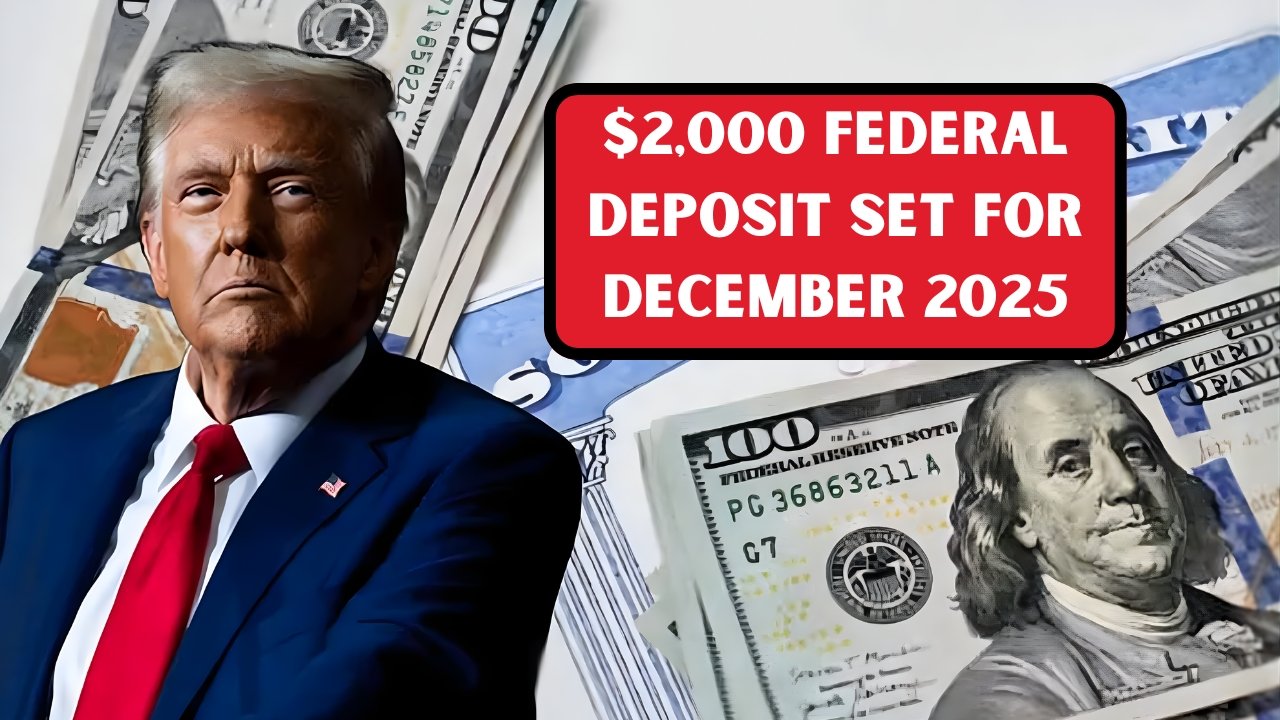
As the final weeks of 2025 unfold, a wave of anticipation has swept across the United States regarding a rumored federal deposit of $2,000. For millions of households—particularly seniors, veterans, and low-income families—the prospect of a year-end financial boost is more than just a headline; it is a potential lifeline during a season marked by peak heating costs and holiday expenditures. However, navigating the modern financial landscape requires distinguishing between official government mandates and the viral speculation that often populates social media feeds. This December, the reality of federal payments is a complex tapestry of regular benefits, administrative adjustments, and proposed legislation that has yet to cross the finish line.
The Origin of the $2,000 Rumor
The “December Deposit” narrative gained significant momentum throughout the fall of 2025, fueled by discussions of the American Worker Rebate Act and various “tariff dividend” proposals. These legislative ideas aimed to distribute federal surplus or trade revenue directly to citizens as a hedge against persistent inflation. While these proposals were widely publicized and received vocal support from high-ranking officials, it is crucial to note that as of mid-December, a universal $2,000 stimulus check has not been signed into law. The confusion often arises because some families are seeing deposits near this amount, but these funds are typically the result of specific tax reconciliations or lump-sum back payments rather than a new nationwide relief program.
Who is Seeing Real Money This Month?
While a blanket $2,000 check for every citizen is not in effect, specific groups of beneficiaries are receiving substantial scheduled payments in December 2025. The Social Security Administration (SSA) and the Department of Veterans Affairs (VA) operate on a strict, birth-date-based calendar that ensures funds arrive before the year ends. Furthermore, Supplemental Security Income (SSI) recipients are experiencing a “double payment” month. Because January 1, 2026, is a federal holiday, the January benefit is legally required to be issued on the last business day of December. For a married couple on SSI, these combined payments can easily approach or exceed the $2,000 mark, leading to the perception of a “new” federal windfall.
December 2025 Verified Payment Framework
To help you track what is actually arriving in your bank account, refer to the following data table based on official SSA and IRS processing schedules for the current month:
| Recipient Category | Payment Type | Timing of Deposit | Typical Amount Context |
| SSI Beneficiaries | Dual Payment | Dec 1 & Dec 31 | Regular + Jan 2026 Advance |
| Social Security (Born 1-10) | Monthly Benefit | December 10, 2025 | Standard Monthly Rate |
| Social Security (Born 11-20) | Monthly Benefit | December 17, 2025 | Standard Monthly Rate |
| Social Security (Born 21-31) | Monthly Benefit | December 24, 2025 | Standard Monthly Rate |
| Veterans Affairs (VA) | Disability/Pension | December 1 & 31 | Service-connected rates |
| Late Tax Filers | Refunds/Credits | Ongoing | Varies (up to $2,000+) |
The Role of Year-End Tax Adjustments
For many taxpayers, the $2,000 figure is actually a reality due to the Internal Revenue Service (IRS) clearing its backlog of amended returns and “Recovery Rebate” claims from previous cycles. Throughout 2025, the IRS has worked to resolve cases where individuals were underpaid on various family tax credits. When these corrections are finalized in December, they are issued as direct deposits. If you are one of the thousands of Americans who filed an amendment earlier this year, your “December Deposit” is likely the settlement of your own tax overpayment. This is a legitimate federal payment, but it is unique to each taxpayer’s history rather than a standard holiday gift from the government.
Preparing for the 2026 COLA Transition
One of the most important factors for beneficiaries this month isn’t just what is arriving, but what is changing for next month. In January 2026, a 2.8% Cost-of-Living Adjustment (COLA) will officially go into effect. While this doesn’t result in a $2,000 lump sum, it does mean a permanent increase in monthly purchasing power. Beneficiaries should have received their “COLA Notice” in their mySocialSecurity online accounts by early December. This notice outlines exactly how much your check will grow starting in the new year. It is a vital document for budgeting, as it represents the government’s official response to the increased cost of goods and services observed over the past twelve months.
Protecting Yourself from Payment Scams
The buzz surrounding a “Federal $2,000 Deposit” unfortunately creates a fertile ground for scammers. Fraudsters often use the holiday season to send “urgent” text messages or emails claiming you must “verify your identity” to release your December funds. It is imperative to remember that the federal government will never ask for your bank details or Social Security number via a text link. If you are eligible for a payment—whether it’s a tax refund, a VA benefit, or your regular Social Security check—it will arrive automatically based on the information already on file. If you haven’t moved or changed banks, no action is required on your part to receive your money.
Looking Ahead to Legislative Changes
While the “universal” $2,000 payment remains a proposal rather than a law in late 2025, the debate continues in Washington. Proponents of the American Worker Rebate Act are pushing for a vote in early 2026, which could potentially result in a retroactive payment for the 2025 tax year. For now, the best strategy for any beneficiary is to manage their holiday budget based on confirmed, scheduled payments. Relying on verified sources like the IRS and SSA websites ensures that you won’t be caught off guard by the difference between social media rumors and your actual bank balance.
FAQs
Q1. Why did I receive two SSI payments in December?
This happens because January 1st is a holiday. To ensure you have funds for the start of the month, the Social Security Administration sends your January payment early, usually on December 31st.
Q2. Is there a $2,000 stimulus check I need to apply for?
No. There is no current federal law authorizing a new $2,000 stimulus application. Any website asking you to “register” or “apply” for such a payment is likely a scam.
Q3. When will the 2.8% COLA increase show up in my check?
The COLA increase officially begins with your January 2026 payment. For SSI recipients, you may see this slightly higher amount reflected in the payment arriving on December 31, 2025.
Disclaimer
The content is intended for informational purposes only. you can check the officially sources our aim is to provide accurate information to all users.