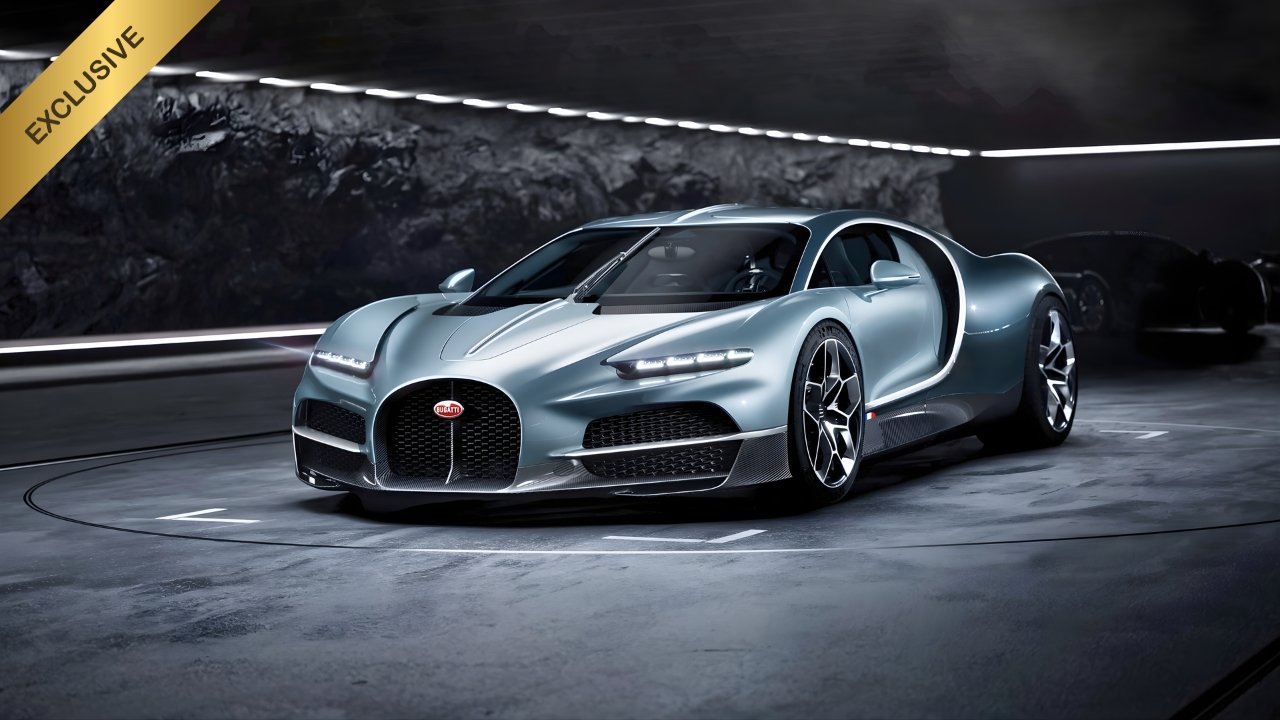
The upcoming generation of hypercar by Bugatti is commonly anticipated to feature high-tech solid-state battery technology invented by Rimac, which is one of the first applications of this state-of-the-art chemistry in a road-going ultra-luxury EV or hybrid. The project remains in the wish and prototype phase, but the top managers of Rimac have indicated in public that a new Bugatti, expected to be launched around 2030, will be the most likely to launch their solid-state pack.
What Solid-State Tech Promises at Rimac
Rimac Technology has unveiled a 100 kWh solid-state prototype packing that is stated to be 20-30 percent energy-dense compared to the present-day condition lithium-ion NMC batteries of premium quality. Although of equal capacity, the pack is said to be approximately 30 kg (approximately 66 lb) lighter than a comparable modern battery, and also has quicker, safer charging. The cells are also being developed with ProLogium and they are cut with superior composite housings at Mitsubishi Chemical Group in order to reduce weight and enhance rigidity.
Why Bugatti Is the Best Showcase.
Since the Bugatti Rimac joint venture was established, Rimac Technology was the in-house high-performance EV vendor of Bugatti, and as such, it is a natural choice to provide next-gen batteries and e-axles. The COO of Rimac has indicated that a future Bugatti would be his first mid-volume use of the new solid-state pack, not a mass-market EV, to demonstrate maximum power, range, and charging capability at an extremely high price point. The small volumes and very high budgets of Bugatti allow early costs in solid-state to be easily absorbed that would be prohibitive in mainstream automobiles.
Projected Advantages of the Next-Gen Bugatti
Being more compact and energetically dense (lower mass) a Bugatti powered by the solid-state pack developed by Rimac would be able to offer both long range and the brutality of a hypercar acceleration. The stiffer pack house also needs to be lighter to enhance the handling performance and the crash performance by reducing the center of gravity and allowing the packaging of the chassis of the vehicle to be of a lighter nature. Quicker, more thermally resistant charging leads to very brief pit-stop type recharges that are more in line with the demands of hypercar buyers at least in perception of the customers concerned.<|human|>Swift and more thermally resistant charging offers the possibility of the very brief pit-stop-style recharges that are more in keeping with the expectations of hypercar customers at least in their minds.
Timeline and What’s Confirmed vs Rumored
The executives of Rimac and the materials provided by the partners state that the solid-state system is expected to be introduced to the market in late this decade, and the target date when the first production installation is expected is often 2030. It has been reported by various sources that this will probably come in a debut of a new Bugatti model, or possibly, but not confirmed by either Bugatti or Rimac, in a particular car. The size of solid-state pack, its ability to deliver power and even the fact of whether it will be a pure EV or a hybrid is yet to be determined until Bugatti unveils its next-gen flagship.
Key Technical Snapshot
| Item | Claimed/Target Figure |
|---|---|
| Pack capacity (prototype) | 100 kWh solid‑state pac |
| Energy density gain | 20–30% higher than current NMC packs |
| Weight saving | Around 30 kg (≈66 lb) lighter |
FAQs
Q1: Is that officially stated that the next Bugatti will have solid-state batteries?
No, according to executives, it is their desire and an imminent application, but the exact model, and the ultimate specification have not been officially established by Bugatti.
Q2: When will a solid-state Bugatti come?
Rimac is aiming at the first application in a production car around 2030 of its solid-state pack, which fits with schedules of the next all-new car at Bugatti.
Q3: What will this be compared to the current EV hypercars?
A solid-state Bugatti would provide the same or better power and range and less weight, higher safety margins, and much faster charging compared to modern lithium-ion hypercars.