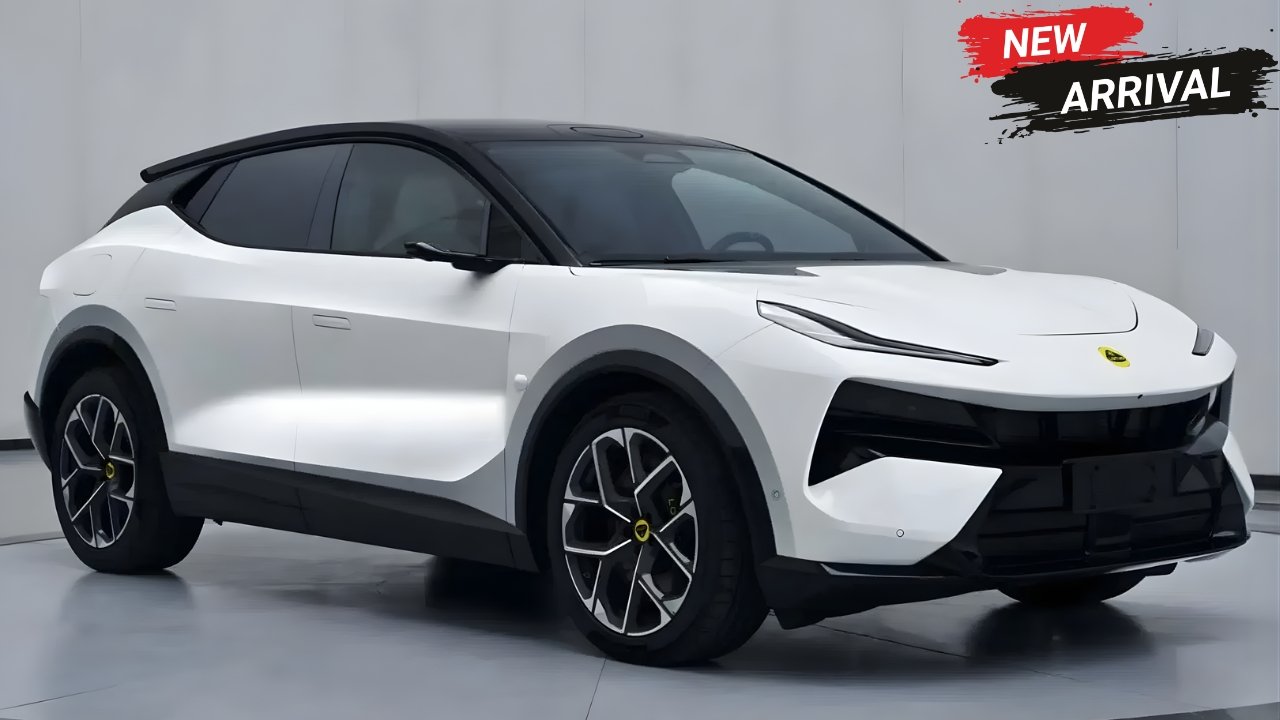
Lotus presents the new Eletre PHEV, its innovative plug-in hybrid SUV which integrates a powerful 2.0L turbo-petrol engine with electric motors to achieve unprecedented 952hp power and a remarkable 420km range which is purely electric-powered. This plan will be the exit of the brand as a totally EV-focused brand in 2028, adopting hybrid flexibility as the market needs and infrastructure issues evolve.
Eletre History and Strategy Shift
– Original all-electric Eletre in 2022 as hyper-SUV pioneer of Lotus.
– PHEV variant dubbed Lotus for Me disclosed December 2025 following EV market deceleration.
– integrates combustion reliability and EV efficiency to reach broader audiences.
– Full production unveiling to be held in January 2026 and the globe will be as its starting point, China.
Who Benefits Most
– Hypercar lovers in need of 952hp supercar acceleration in family SUV shape up.
– Daily drivers take advantage of 420km CLTC EV range to have zero-emission drives.
– Extended range security of long-distance travelers who can use their unlimited petrol.
– Luxury customers who love massaging seats, KEF audio and high level driver aids.
Performance and Rules of Powertrain
– 2.0L turbo four-cylinder and 70kWh battery and two electric motors.
– 952hp total gives it -100km/h in only 3.3 seconds with all-wheel-drive traction.
– 30-80% DC charging takes 8 minutes in the event of minimal downtime.
– Hybrid flexibility is not compromised by a smooth petrol-electric switchover.
Quick Eletre PHEV Snapshot
| Item | Detail |
|---|---|
| Total Power | 952hp |
| EV Range | 420km CLTC |
| 0-100km/h | 3.3 seconds |
| Battery | 70kWh |
| Charge Time | 8 min (30-80%) |
Design and Exterior Updates
– Preserves the threatening hyper-SUV shape of Eletre with practical open grille.
– Alloy wheels unique to the car, “For Me” badging, carbon like D-pillars.
– Matrix LED headlights, door handles are in flush to maintain aerodynamic efficiency.
– Minor visual indicators distinguish PHEV and its purely-electric equivalent.
Interior Technology and Luxury
– Large OLED central touch screen of 15.1-inches dual-digital display.
– The four seats have power-adjustable heating, cooling, and massage.
– Soft-close door, adjustable ambient lighting, full package ADAS.
– 23-speaker KEF premium audio system produces panoptic cabin sounds.
Position on the Market and Brand Implications
– Head-on fights Porsche Cayenne Turbo E-Hybrid and BMW XM based on pure power.
– Seals EV infrastructure gaps through hybrid pragmatics to apply in the field.
– Reflects the realistic reaction of Lotus to the slowing international EV flow.
– China market launch Q1 2026 gets feet wet ahead of possible global growth.
Economical and Practical Effects
– Rapid charging beats most of the full EVs and petrol eliminates range concerns.
– Huge performance comes at luxury SUV prices, and pure supercars are undercut.
– Hybrid form increases the customer base of Lotus outside EV fanatics.
– Positions brands forth future of multi-powertrain in regulatory uncertainty.
FAQs
Q1: What was the motivation behind the reversal of the EV plan?
Shifting tendencies of the market, restrictions on charges, and high interest of hybrid consumers.
Q2: Daily realistic EV range expectations?
420km CLTC is superior in terms of urban cycling; petrol engine is useful in long distances.
Q3: How soon are the buyers going to receive deliveries?
China begins Q1 2026 after January disclose; the world timing is after demand evaluation.