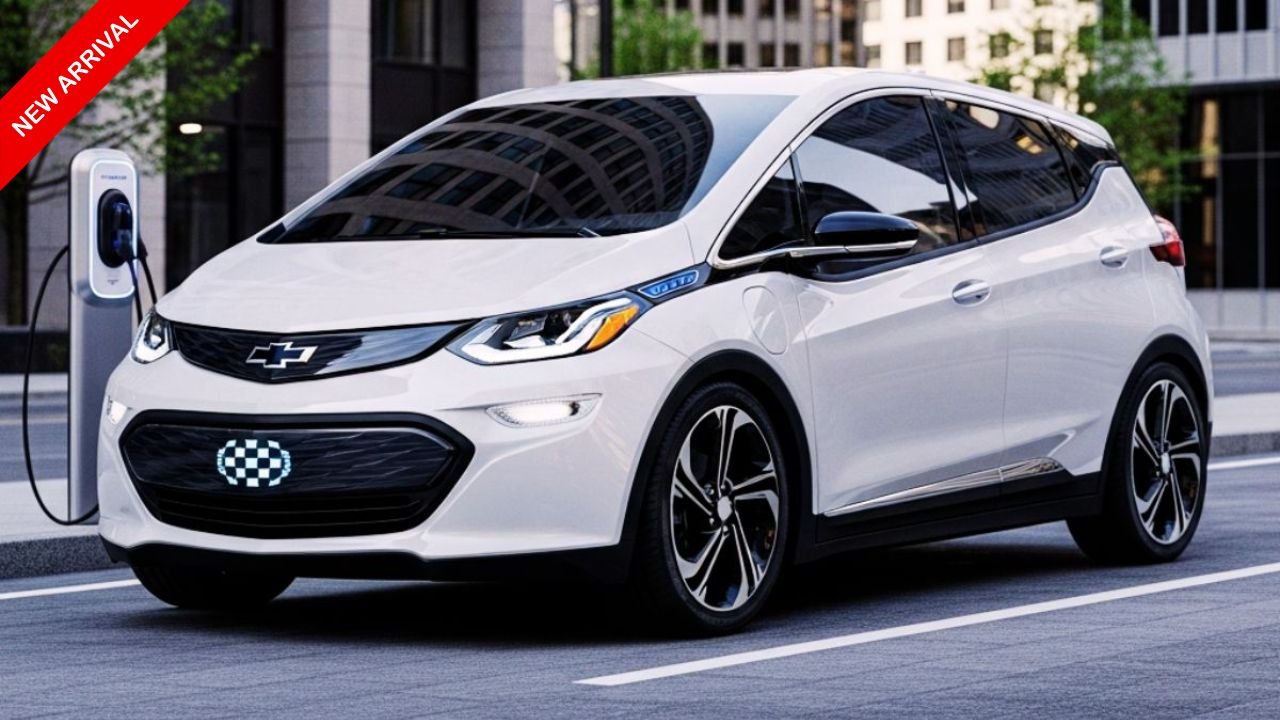
The 2026 Chevrolet Bolt EV is the reboot of Chevy’s most popular electric hatchback, returning on Ultium tech with a focus on more range, quicker charging and a still‑accessible price point around 30,000 dollars. It targets buyers who want a practical, compact EV with lower running costs rather than luxury‑class features.
Price, Positioning And Release Timing
GM has confirmed that the new Bolt will be priced close to the outgoing model, with executives indicating a “slightly higher” starting point than the old 28,795‑dollar MSRP. Analysts and GM watchers expect a base price right around 30,000 dollars before incentives, keeping it among the cheapest EVs in the U.S. market.
The next‑gen Bolt EV is slated to debut in 2025 as a 2026 model, with first customer deliveries expected in early 2026. GM has also signaled that the Bolt will anchor a small family of affordable Ultium‑based EVs, not stand alone as a one‑off.
Platform, Battery And Range
To save costs and speed development, the 2026 Bolt EV will continue to use an evolved version of GM’s BEV2 architecture, but now paired with Ultium‑drive components and LFP (lithium iron phosphate) battery chemistry. LFP cells are cheaper, more durable and less sensitive to repeated fast‑charging, though they have lower energy density than nickel‑rich packs.
Range estimates vary by source, but most reporting converges on an EPA‑estimated 250–300+ miles depending on final pack size and tuning:
-
Some analysts expect around 260 miles on a mid‑size pack using LFP cells, with 100 miles added in roughly 30 minutes on DC fast‑charging.
-
Others suggest GM may target “more than 300 miles” in at least one configuration to keep the Bolt competitive as rivals improve.
Either way, this is a notable step up from the previous Bolt’s 247–259‑mile ratings, especially given the lower‑cost chemistry.
Powertrain, Performance And Charging
The 2026 Bolt will use an Ultium‑drive electric motor broadly similar to the unit in the Equinox EV, with reports pointing to roughly 200–210 horsepower and front‑wheel drive as standard. That should yield 0–60 mph times under 7 seconds, keeping the car zippy in city and highway driving without chasing hot‑hatch figures.
Charging improvements are a key part of the redesign:
-
LFP Ultium pack with significantly faster DC charging than the outgoing Bolt, with some sources citing about 100 miles added in 30 minutes and much better charge‑curve stability.
-
GM has announced that the new Bolt family will adopt NACS (Tesla‑style) charge ports, giving access to a large fast‑charging network and simplifying road‑trip planning.
An 11 kW AC onboard charger is expected, retaining overnight home‑charging convenience.
Key 2026 Bolt EV Specs At A Glance (Expected)
| Area | 2026 Chevrolet Bolt EV (Projected) |
|---|---|
| Platform | Updated BEV2 structure with Ultium drive and LFP battery |
| Battery | LFP pack, estimated mid‑60 kWh usable (exact size TBD) |
| Range | Roughly 255–300+ miles EPA‑est., depending on tune and trim |
| Motor | Single front motor, about 200–210 hp |
| 0–60 mph | Under 7 seconds (est.) |
| DC Fast Charging | ~100 miles in ~30 minutes; NACS port, quicker curve than prior Bolt |
| Base Price | Around $30,000 before incentives, targeted as GM’s most affordable EV |
These figures are based on GM statements and multiple early previews; final EPA numbers and pricing will be confirmed closer to launch.
Interior, Tech And Safety Updates
The next‑gen Bolt is expected to keep a roomy hatchback or compact‑crossover silhouette similar to the outgoing Bolt/Bolt EUV, with a focus on improved materials and a more modern cockpit. Updates likely include:
-
A larger central touchscreen running GM’s latest Google‑built‑in infotainment, with native Maps, Assistant and app support.
-
A fully digital instrument cluster with EV‑specific energy and range displays.
-
More soft‑touch surfaces and better sound insulation to address criticisms of the older car’s cabin feel.
On the safety and driver‑assist side, GM has said Super Cruise, its hands‑free highway system, will be offered on the new Bolt, at least on higher trims. Expect a robust suite of standard assists—automatic emergency braking, lane‑keeping assistance, blind‑spot monitoring and rear cross‑traffic alert—aligned with GM’s latest mainstream EVs.
Why The 2026 Bolt EV Matters
GM retired the original Bolt in 2023 despite record sales, largely to transition away from first‑generation battery tech and address recall baggage. Bringing the Bolt back on Ultium hardware and LFP chemistry allows GM to:
-
Offer one of the few sub‑$30,000‑ish EVs in America, especially once federal and state incentives are counted.
-
Leverage faster development and shared components across Ultium models, cutting costs and time‑to‑market.
-
Keep an established nameplate that many mainstream buyers already recognise as a practical, efficient EV.
If GM hits its price and range targets, the 2026 Bolt EV could again become the default choice for buyers wanting an affordable, everyday electric hatchback with decent road‑trip capability rather than a premium badge.
SOURCE
FAQs
Q1 How much will the 2026 Chevy Bolt EV cost?
GM signals a starting price “slightly higher” than the old model; most estimates place it around 30,000 dollars before incentives.
Q2 What range can you expect?
Reports point to roughly 255–300+ miles of EPA‑estimated range, depending on final battery tuning and trim level.
Q3 Is the new Bolt using Ultium tech?
Yes. It keeps an evolved BEV2 structure but switches to Ultium drive hardware and LFP battery cells to cut costs, improve charging and simplify production