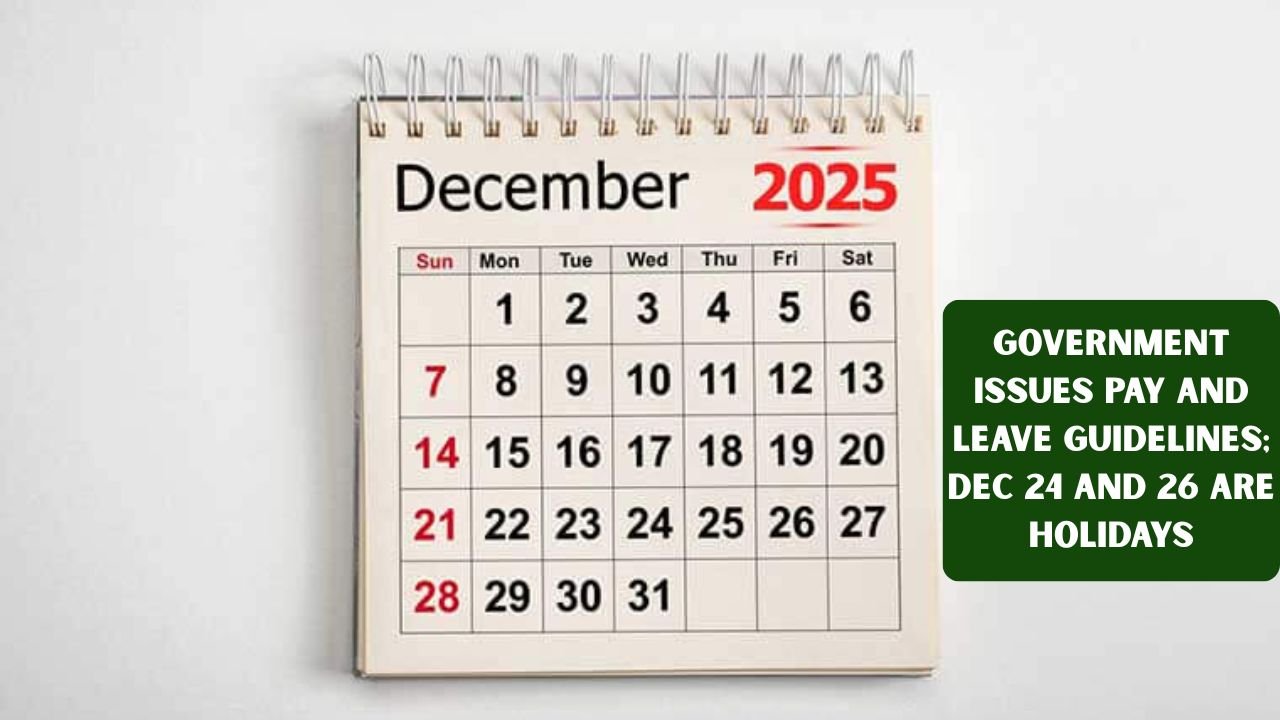
The year 2025 concludes with a significant administrative update for the federal workforce. In a move to facilitate extended holiday celebrations, the government has officially issued comprehensive pay and leave guidelines following the declaration of December 24 (Christmas Eve) and December 26 (the day after Christmas) as holidays.1 This directive, established through a Presidential Executive Order, effectively creates a bridge around the traditional Christmas Day holiday, allowing many employees to enjoy a continuous five-day break.2 However, the announcement comes with specific technicalities regarding “holiday premium pay” and leave accounting that every employee must understand to ensure their year-end transition is smooth.
Scope of the Executive Order
The directive primarily targets the executive departments and agencies of the federal government.3 By designating these two additional days as holidays, the administration aims to bolster employee morale and recognize the dedication of the workforce. For most federal workers, the period from December 24 to December 26 will be treated as a single holiday block for administrative purposes. While this is a welcome reprieve for many, the order also grants agency heads the authority to keep certain installations open.4 This is particularly relevant for sectors involved in national security, defense, and essential public services, where staffing remains a priority regardless of the calendar date.5
Pay and Leave Administration Details
For the vast majority of employees who are excused from duty, the guidelines are straightforward: they will receive their basic rate of pay as if they had worked a regular day. The “holiday” designation means that no “leave” will be deducted from their accrued balance for these dates. For those who had already requested annual leave for December 24 or 26, the system will automatically adjust, and the leave hours will not be charged. However, a critical caveat exists for those with “use-or-lose” leave. If an employee was planning to use these days to burn off excess leave before the January 10, 2026, deadline, they must be careful. Forfeited leave due to these new holidays cannot be restored under current law, so rescheduling is highly advised.
Holiday Pay and Leave Reference Table
| Category of Employee | Status on Dec 24 & 26 | Pay Entitlement | Leave Impact |
| Full-Time (Excused) | Off Duty | Basic Pay | No Leave Charged |
| Full-Time (Required to Work) | On Duty | Holiday Premium Pay | No Leave Charged |
| Part-Time (Scheduled) | Off Duty | Basic Pay for Scheduled Hours | No Leave Charged |
| Part-Time (Not Scheduled) | Off Duty | No Pay (unless “in-lieu-of”) | No Impact |
| Standby/Firefighters | Variable | Special Pay Provisions Apply | May still be charged leave |
Understanding Holiday Premium Pay
A vital section of the new guidelines focuses on those who cannot be excused from their posts. Employees required to work “non-overtime” hours on December 24 or December 26 are entitled to holiday premium pay under 5 U.S.C. 5546(b). This essentially means they receive double their basic rate of pay for the hours worked during their regular tour of duty. It is important to note that this premium does not apply to employees who already receive annual premium pay for standby duty or those covered under specific firefighter pay provisions. Understanding these distinctions is crucial for accurate payroll reporting as the fiscal year draws to a close.
“In-Lieu-Of” Holiday Provisions
For employees whose regular day off falls on Wednesday (Dec 24) or Friday (Dec 26), the government has clarified the “in-lieu-of” holiday rules. This ensures that no full-time worker is deprived of the benefit simply because of their rotation. Generally, if a holiday falls on a non-workday, the preceding workday is designated as the holiday.6 For example, if an employee’s weekend is Wednesday and Thursday, Tuesday (Dec 23) would likely become their “in-lieu-of” holiday for Christmas Eve. These rules can become complex for those on compressed work schedules, and the Office of Personnel Management (OPM) has urged staff to consult their HR departments for individual schedule confirmations.
Impact on the Private Sector and Banks
While the federal government has set this precedent, it is essential to clarify that this order does not mandate private businesses or banks to close.7 The Federal Reserve’s holiday schedule remains the primary guide for the banking sector, and currently, December 24 and 26 are not listed as federal banking holidays. Consequently, most major financial institutions and retail outlets will remain open, though they may operate on shortened hours. Private sector employees should refer to their specific corporate handbooks, as many companies choose to align with federal schedules, but they are not legally obligated to do so by this specific executive order.8
Preparing for the Year-End Transition
As the December 24 and 26 holidays approach, employees should verify their timecards and ensure that their “in-lieu-of” days are correctly recorded. The OPM has emphasized that the goal is a seamless implementation that respects both the spirit of the holidays and the operational needs of the government. For those in leadership roles, early communication regarding which staff members are “essential” and required to report for duty will prevent last-minute confusion. As we move toward 2026, these guidelines serve as a final administrative pillar for the 2025 calendar year.
FAQs
Q1. Will I be charged leave if I already had a vacation approved for Dec 24 and 26?
No. Since these days are now official holidays, your approved annual leave will not be charged. The hours will be returned to your leave balance.
Q2. Do part-time employees get the extra days off?
Part-time employees are entitled to a holiday only if they have a regularly scheduled tour of duty on that specific day. They do not receive “in-lieu-of” holidays if the date falls on their normal day off.
Q3. Is “Holiday Premium Pay” the same as overtime?
No. Holiday premium pay is for your regularly scheduled hours worked on a holiday. Any hours worked beyond your regular 8-hour or 10-hour shift would be classified as standard overtime.
Disclaimer
The content is intended for informational purposes only. You can check the official sources; our aim is to provide accurate information to all users.