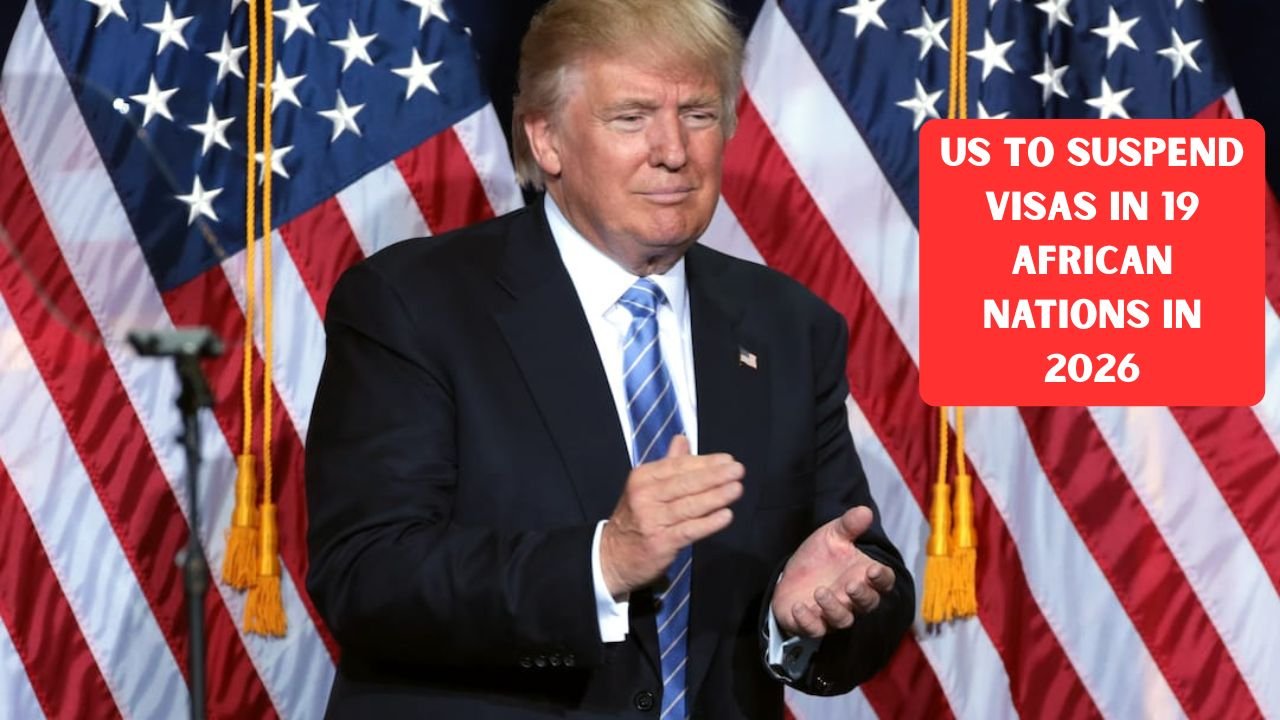
In a major shift in immigration policy, the United States has announced a partial suspension of visa issuance for 19 countries, including a significant number of African nations, effective January 1, 2026. This move follows Presidential Proclamation 10998, which aims to enhance national security by limiting entry from countries that the U.S. government identifies as having deficiencies in screening and vetting protocols. While the policy affects various regions, the impact on the African continent is particularly noteworthy, given the volume of travel and student exchanges between these nations and the United States.
Understanding the 2026 Visa Suspension
The upcoming restrictions are not a blanket ban on all travel but rather a targeted suspension of specific visa categories. According to the U.S. Department of State, the suspension primarily affects immigrant visas and certain nonimmigrant categories, specifically the B-1/B-2 visitor visas, as well as F, M, and J student and exchange visitor visas. The core objective cited by the administration is to protect the security of the United States by ensuring that entering foreign nationals do not pose a threat to public safety or national interests. This policy underscores a broader trend toward more rigorous border controls and information-sharing requirements for foreign governments.
List of Affected African Nations
Among the 19 countries identified in the partial suspension list, the majority are located in Africa. These nations were selected based on assessments of their internal screening processes, visa overstay rates, and cooperation with U.S. immigration authorities. For travelers from these regions, the path to obtaining a U.S. visa will become significantly more complex starting in early 2026.
| Country | Primary Restriction Type |
| Angola | Immigrant & B, F, M, J Nonimmigrant |
| Benin | Immigrant & B, F, M, J Nonimmigrant |
| Burundi | Immigrant & B, F, M, J Nonimmigrant |
| Cote d’Ivoire | Immigrant & B, F, M, J Nonimmigrant |
| Gabon | Immigrant & B, F, M, J Nonimmigrant |
| The Gambia | Immigrant & B, F, M, J Nonimmigrant |
| Malawi | Immigrant & B, F, M, J Nonimmigrant |
| Mauritania | Immigrant & B, F, M, J Nonimmigrant |
| Nigeria | Immigrant & B, F, M, J Nonimmigrant |
| Senegal | Immigrant & B, F, M, J Nonimmigrant |
| Tanzania | Immigrant & B, F, M, J Nonimmigrant |
| Togo | Immigrant & B, F, M, J Nonimmigrant |
| Zambia | Immigrant & B, F, M, J Nonimmigrant |
| Zimbabwe | Immigrant & B, F, M, J Nonimmigrant |
Implications for Travelers and Students
The suspension of F, M, and J visas is a significant blow to the educational aspirations of many African students who view the U.S. as a premier destination for higher learning. Similarly, the restriction on B-1/B-2 visas will disrupt business travel and family visits. It is important to note that the proclamation applies only to individuals who are outside the United States and do not hold a valid visa by the effective date of January 1, 2026. Those who already possess a valid visa will not have their current documents revoked and may continue to use them for travel until they expire.
Security and Vetting Justifications
The U.S. government has pointed to high overstay rates and “woeful inadequacies” in screening and vetting as the primary reasons for these measures. For instance, countries like Malawi and The Gambia have seen high percentages of visa holders failing to return home after their authorized stay. Additionally, some nations lack the infrastructure to accurately report births or track criminal records, making it difficult for U.S. consular officers to verify the identities and backgrounds of applicants. By implementing these suspensions, the U.S. hopes to pressure these governments into improving their internal security systems.
Exceptions and Special Cases
Despite the broad nature of the suspension, there are specific exceptions. Lawful Permanent Residents (Green Card holders) are not affected. Furthermore, certain dual nationals who apply with a passport from a non-suspended country may still be eligible. There are also limited provisions for Special Immigrant Visas (SIVs) for U.S. government employees and participants in major international sporting events. However, for the average citizen in the affected 19 countries, the opportunities for new visa issuance will be severely curtailed for the foreseeable future.
Long-term Impact on U.S.-Africa Relations
The decision to include so many African nations in this proclamation has raised concerns about the long-term diplomatic relationship between the U.S. and the continent. While the U.S. maintains that these are security-driven measures, many view the move as a barrier to economic and cultural exchange. As the 2026 deadline approaches, many of the affected nations may seek to negotiate improved vetting standards in hopes of having their names removed from the list, though such diplomatic efforts often take considerable time to yield results.
Moving Forward in 2026
As the global landscape of travel continues to evolve, staying informed about policy changes is crucial for anyone planning international travel. The 2026 visa suspension marks a definitive period of heightened scrutiny. Travelers are encouraged to consult official government websites and legal experts to understand how these changes might impact their specific situations. While the door is not completely closed, it has certainly become much narrower for many across the African continent
FAQs
Q1. Does this policy revoke my current U.S. visa if I am from an affected country?
No. The proclamation specifically states that visas issued before January 1, 2026, will not be revoked. If you have a valid visa, you can continue to use it for travel.
Q2. Can I still apply for a visa even if my country is on the list?
While you can technically submit an application and schedule an interview, the proclamation makes most applicants in the restricted categories ineligible for issuance unless they qualify for a rare exception.
Q3. Are there any African countries on the “Full Suspension” list?
Yes. In addition to the 19 partial suspensions, countries like Burkina Faso, Mali, Niger, and South Sudan face a full suspension of both immigrant and nonimmigrant visas.
Disclaimer The content is intended for informational purposes only. you can check the officially sources our aim is to provide accurate information to all users.