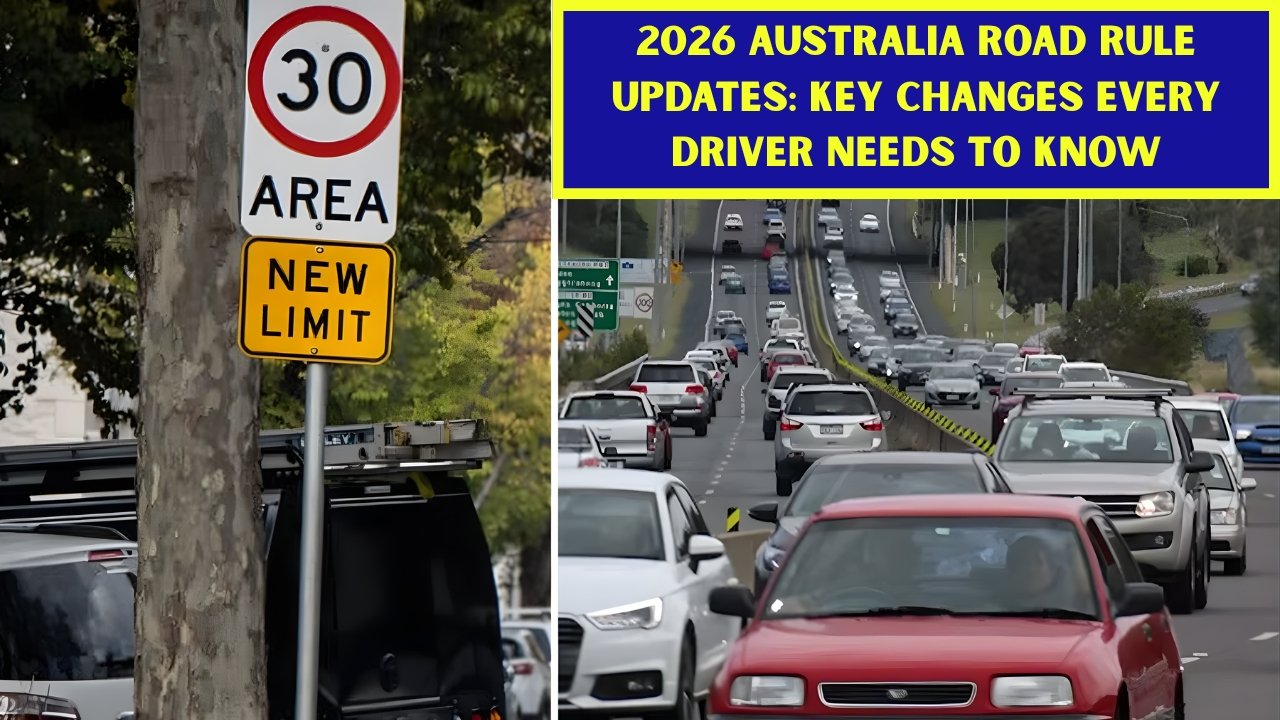
The Australian motorists in all the states and territories are experiencing a significant regulatory upheaval as Australia heads to 2026. The changes include the obligatory use of pedestrian safety equipment, AI-enhanced law enforcement, and more rigid regulation of older drivers, all of them being the components of the National Road Safety Action Plan. These changes are crucial to preventing huge fines and a successful change to a new driving environment.
EVs with Mandatory Pedestrian Warning Sounds
On November 1, 2026 an Australian Design Rule amendment, Australian Design Rule 113/00, comes into force in full. A new-model electric, hybrid, and hydrogen fuel cell vehicles that are currently sold in Australia are all required to have an Acoustic Vehicle Alerting System (AVAS). Such technology produces a distinct sounding when a vehicle is in low speed (usually below 20 km/h) to draw attention of pedestrians, especially those with low vision, to the presence of a vehicle. Although it does not need to be retrofitted by motorists that already have an older EV, the entire new showroom models must comply by the 2026 deadline.
Older Driver licensing Reform
Western Australia and the Northern Territory will have the National Heavy Vehicle Driver Competency Framework fully adopted by early 2026, and this will leave the whole country under the same standard of older drivers. Drivers over 75 years old now have to face some required medical examinations to renew their license and the frequency of this test will be raised to yearly after a driver is of 80 years. The checks are built to guarantee safety of the roads by confirming both physical and cognitive aptitude, unlike the old systems of automatic renewal.
Reduced City Speed Limit and AI Detection
Nationwide campaign of defending the vulnerable road users will involve more urban speed limits (50 km/h) to 40km/h (and in some cases 30km/h) in high pedestrian areas, school zones, and the CBDs. In addition to this, there has been an increased deployment of AI-driven traffic cameras. These sophisticated systems are now capable of automatically identifying speeding violations, as well as seatbelt violations and driving with an illegal mobile phone in 2026 after successful trials in 2025. These cameras are functioning 24/7 in the ACT and NSW and fines on distracted driving exceed over 1200 dollars in some areas.
New Fine Defaulter Penalties and UHPV Licensing
The Fines Reform Regulations 2026 will undergo significant changes that will be introduced on July 1, especially in Victoria. The new system reforms the process of dealing with traffic violations whose victims would not get paid, creating a faster system of issuing enforcement warrants and increasing the administrative penalties of payment delays. Moreover, the drivers of Ultra High Powered Vehicles (UHPV) are now required to have a special license of the U Class. The operating of these high-performance vehicles when the automatic stability intervention systems have been disabled has now become a criminal offense and carrying heavy penalties and even the loss of the license.
Overtaking Stationary Emergency and Service Vehicles
The safety regulations of vehicles at rest have been synchronized up to 2026. In most states, drivers must now reduce their speed to 40 km/h (or 25 km/h in SA) when passing at rest or very slow moving emergency vehicles, tow trucks, or roadside assistance vehicles (such as RACV or NRMA) whose lights are flashing. Not only is failure to slow down dangerous to the workers on the road, but it also leads to fines of over 900 and loss of demerit points, based on how particular state enforces the law of Slow Down, Move Over.
Key Rule Changes At-a-Glance
| Rule Area | 2026 Change | Estimated Penalty |
| EV Safety | Mandatory AVAS sounds (New models) | Compliance required for sale |
| Urban Speed | Rollout of 40 km/h & 30 km/h zones | State-specific speeding fines |
| Distraction | AI camera detection for phones/seatbelts | Up to $1,200 + Demerits |
| Emergency | Must slow to 40 km/h when passing | ~$400 to $900+ |
FAQs
1. Should I update my existing Electric Vehicle?
No. The AVAS requirement of 2026 is only effective to new vehicles sold in the market. The owners of the already existing hybrids or EVs will not need to refit their vehicles with sound-making devices.
2. Is the 40 km/h change in the speed limit country-wide?
Although the federal government promotes it, local councils and state governments have the mandate to implement it. These zones are actively developed in most large cities (Sydney, Melbourne, Brisbane) in 2026.
3. What is a U-Class license?
It is a new category of license that will be needed by those drivers whose vehicles identified as high-performance that have specific ratios of power to weight. It involves special safety training which is directed towards the handling of high-torque engines.
Disclaimer
The information is informational in nature. One can verify the official sources; we want to give correct information to every user.