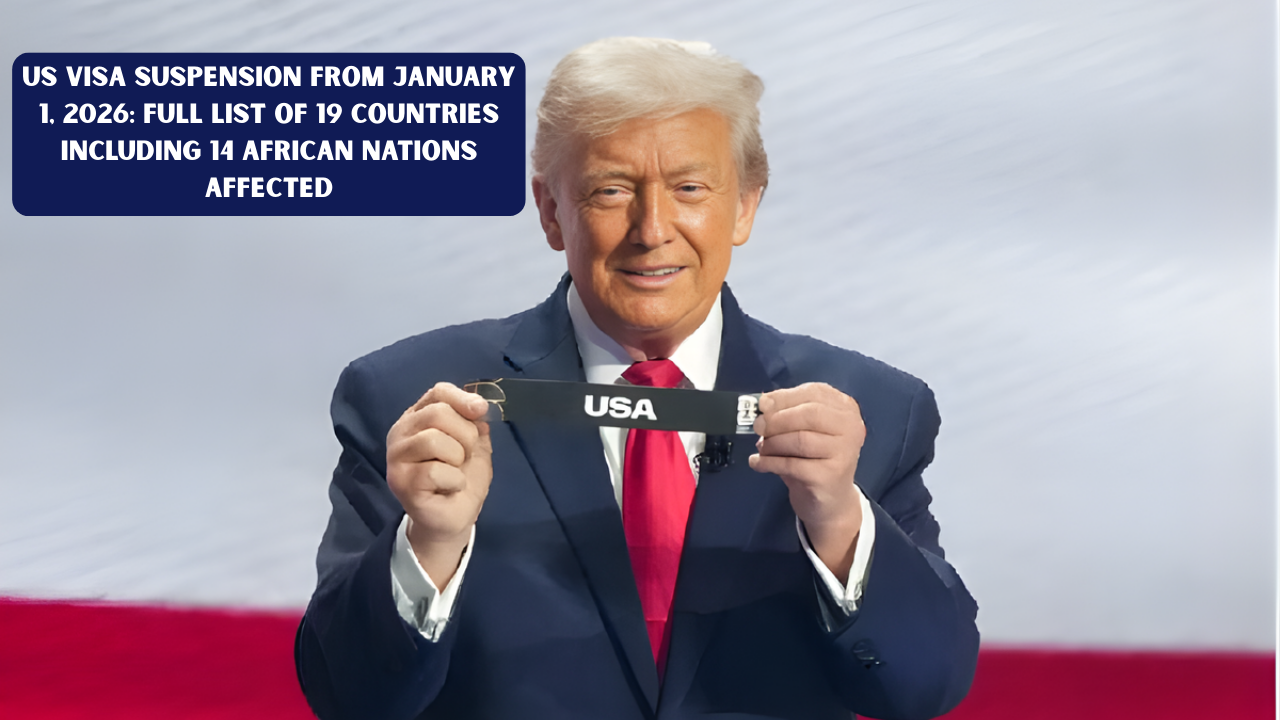
The global travel landscape is witnessing a significant shift as the United States prepares to implement a new series of visa restrictions starting January 1, 2026. This move, rooted in Presidential Proclamation 10998, aims to bolster national security by tightening the entry requirements for citizens from specific nations deemed to have “vetting deficiencies” or security risks. The update expands upon earlier restrictions and brings the total number of countries facing various levels of visa suspensions to nearly 40. However, the most immediate impact will be felt by 19 specific countries added or modified in this latest phase, with a heavy emphasis on the African continent.
Understanding the New Presidential Proclamation
The primary objective behind the 2026 visa suspension is to address concerns regarding international security and the integrity of travel documents. According to official government statements, these countries have been identified because they either lack the infrastructure for robust identity management or fail to share critical public safety and terrorism-related information with U.S. authorities. For many travelers, this means that starting from the first day of 2026, the ability to obtain new immigrant or nonimmigrant visas—including those for tourism, business, and study—will be severely restricted or entirely halted.
The Disproportionate Impact on Africa
One of the most striking aspects of the new policy is its focus on Africa. Out of the 19 primary countries facing new or continued “full” suspensions, 14 are located on the African continent. This development has sparked significant dialogue among international policy experts and travel agencies. Nations such as Nigeria, Senegal, and Mali are now navigating a complex new reality where their citizens may find it nearly impossible to secure travel authorization for the United States unless they meet very specific, narrow criteria for exemptions.
Breakdown of Affected Countries and Restrictions
The restrictions are generally categorized into “Full” and “Partial” suspensions. Below is a detailed look at the countries most heavily impacted by the January 1, 2026, enforcement date.
| Restriction Type | Countries Affected | Primary Visa Categories Suspended |
| Full Suspension | Afghanistan, Burkina Faso, Burma, Chad, Republic of the Congo, Equatorial Guinea, Eritrea, Haiti, Iran, Laos, Libya, Mali, Niger, Sierra Leone, Somalia, South Sudan, Sudan, Syria, Yemen | All Immigrant and Nonimmigrant Visas (B, F, M, J, etc.) |
| Partial Suspension | Angola, Antigua and Barbuda, Benin, Burundi, Cote d’Ivoire, Cuba, Dominica, Gabon, The Gambia, Malawi, Mauritania, Nigeria, Senegal, Tanzania, Togo, Tonga, Venezuela, Zambia, Zimbabwe | All Immigrant Visas; Nonimmigrant B-1/B-2, F, M, and J Visas |
| Special Modification | Turkmenistan | All Immigrant Visas (Nonimmigrant visitor/student bans lifted) |
Key Categories: Full vs. Partial Bans
A “Full Suspension” is the most rigorous level of restriction, effectively closing the door to almost all travelers from those nations. This includes people seeking to move permanently to the U.S. and those looking for temporary stays for work or education. On the other hand, the “Partial Suspension” allows for some flexibility in specific nonimmigrant categories but still blocks the most common pathways, such as the B-1/B-2 visitor visas and F-1 student visas. For Nigeria, the impact is particularly high, as the country historically accounts for a large volume of U.S. visa applicants.
Who Is Exempt from the New Rules?
While the proclamation is broad, it is not an absolute ban on every individual from these nations. The U.S. government has maintained several critical exemptions to ensure that the policy does not unfairly penalize those already integrated into American society. For instance, Lawful Permanent Residents (Green Card holders) are not affected. Additionally, individuals who already possess a valid U.S. visa on the morning of January 1, 2026, will not have their visas revoked. The rules primarily target “new” applicants who are outside the United States and do not hold a valid entry document when the clock strikes midnight on the effective date.
Humanitarian and Diplomatic Exceptions
There are also specific “discretionary waivers” and categorical exceptions for those in unique circumstances. These include individuals traveling on diplomatic visas (such as A-1 or A-2), certain categories of refugees, and ethnic or religious minorities facing extreme persecution in specific regions like Iran. Furthermore, those participating in major international sporting events, such as the upcoming World Cup, may find specialized pathways for entry, though these are subject to rigorous individual vetting by consular officers.
Strategic Planning for 2026 Travel
For families, students, and business professionals from the 19 affected nations, the message is clear: early action is essential. If you currently hold a valid visa, it is highly recommended to complete any planned travel before the end of 2025 to avoid potential secondary screening or administrative delays at the border. For those intending to apply for a visa in the new year, it is vital to consult with immigration legal experts or check the official Department of State “travel.state.gov” portal for the latest updates on waiver eligibility.
FAQs
1. Will my current U.S. visa be canceled on January 1, 2026?
No. The proclamation explicitly states that visas issued before the effective date will not be revoked. You can continue to use your valid visa until its expiration date.
2. Can Nigerian students still apply for an F-1 visa after the ban starts?
Under the “Partial Suspension,” new F-1 (student) visas for Nigerian nationals are generally suspended. You would need to qualify for a specific exemption or a national interest waiver to proceed.
3. Are there exceptions for medical emergencies or family deaths?
The Secretary of State and the Secretary of Homeland Security have the authority to grant waivers on a case-by-case basis if the entry is in the U.S. national interest and the individual poses no threat.
disclaimer
The content is intended for informational purposes only. you can check the officially sources our aim is to provide accurate information to all users.