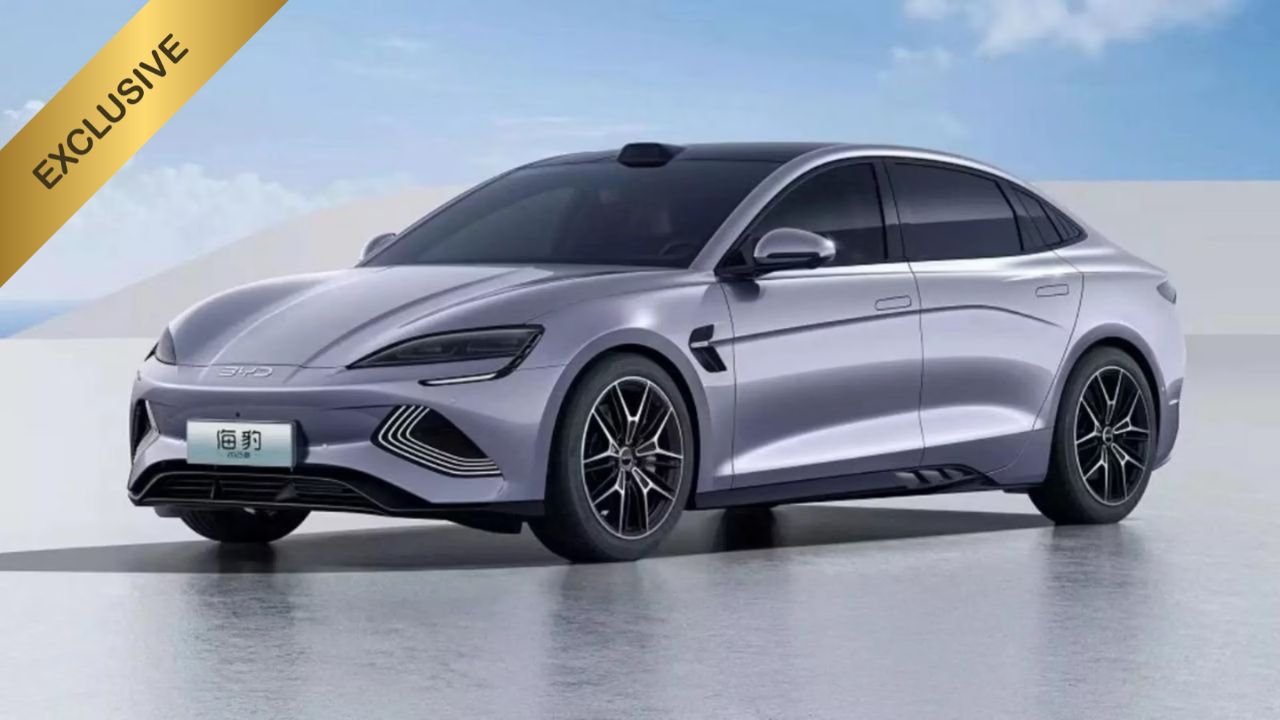
BYD has given the Seal a meaningful 2025 update that focuses on three areas owners cared most about: ride comfort, in‑car tech and driver‑assistance sophistication. The popular electric sedan now gets more advanced suspension hardware, faster charging on certain variants, upgraded climate and connectivity features, and a tech package that pushes it closer to premium European rivals.
Ride and Handling: New Suspension & 800V Hardware
One of the headline changes is the introduction of Frequency Selective Dampers (FSD) on the mid‑spec Premium variant, a feature that was previously reserved only for the top Performance model. These dampers automatically adapt to smaller and larger bumps differently, helping the Seal feel more composed over broken tarmac without becoming floaty at high speeds. The Performance variant goes a step further and adopts BYD’s DiSus‑C active damping system, which constantly softens or firms up the suspension based on road inputs and driving style, transforming what used to be the harshest‑riding version into the most sophisticated.
Underneath, the China‑market 2025 Seal also moves to an 800V electrical architecture on key versions, enabling higher‑power DC fast charging and more efficient power delivery at motorway speeds, while still using BYD’s cell‑to‑body “Blade Battery” structure for rigidity and crash safety.
Power, Range and Variants
The updated Seal continues to offer multiple battery and motor configurations, but with tweaks to performance and charging. In China, the 2025 Seal is offered with 61.44 kWh and 80.64 kWh packs, delivering CLTC ranges from about 510 km to 650 km depending on variant, while India‑spec cars use 61.44 kWh and 82.56 kWh batteries with claimed ranges up to 650 km. Single‑motor rear‑drive models produce between roughly 231 PS and 313 PS (about 228–309 bhp), while the dual‑motor all‑wheel‑drive Performance version now delivers around 523 bhp and 670 Nm, good for 0–100 km/h in as little as 3.8 seconds in some markets. Fast‑charging speeds climb up to about 180–230 kW DC on the 800V cars, allowing 10–80 percent top‑ups in roughly 25 minutes when using a high‑power charger.
2025 BYD Seal: Key Numbers
| Variant (example) | Drive / Output | Battery & Range (claimed) | Notable tech |
|---|---|---|---|
| 510 Standard (China) | RWD, 231 PS, 380 Nm. | 61.4 kWh, ~510 km CLTC; 10–80% in ~25 min @180 kW. | 800V arch., LFP Blade pack. |
| 650 Long‑Range / Intelligent Driving | RWD, 313 PS, 380 Nm. | 80.64 kWh, ~650 km CLTC; up to 230 kW DC. | LiDAR (on Intelligent), NOA, AVP. |
| 600 AWD Intelligent Driving / Performance | AWD, 530 PS, 690 Nm; 0–100 km/h 3.8 s. | 80.64/82.56 kWh, ~580–600 km range. | DiSus‑C suspension, 800V, advanced ADAS. |
Interior Comfort, AC and Infotainment
BYD has responded to owner feedback about cabin heat and convenience with a more capable climate system and additional comfort features. All 2025 Seal variants now gain a powered sunshade for the panoramic roof—replacing the old accessory sunshade—which keeps the cabin cooler in direct sun. The air‑conditioning system gets a larger compressor and integrated purification, improving both cooling speed in hot climates and air quality in polluted cities. Inside, some markets also see detail tweaks such as darker interior themes, revised center‑panel design and an upgraded 12‑speaker Dynaudio or DynAudio‑branded audio system on higher trims, adding to the Seal’s premium feel.
Connectivity is more seamless as well. Wireless Apple CarPlay and Android Auto are now standard across the updated range in India and several export markets, and the large rotating infotainment screen continues to be a focal point, with software refinements to EV energy displays and ADAS visualisation.
Safety, ADAS and LiDAR Upgrade
On the safety front, the Seal already carried strong credentials with 5‑star Euro NCAP and ANCAP ratings, backed by a rigid cell‑to‑body battery structure and up to 9–13 airbags depending on market. The 2025 model pushes tech further by adding a roof‑mounted LiDAR unit on “Intelligent Driving” versions in China, enabling more advanced driver‑assistance features like high‑precision NOA (navigation on autopilot) and AVP (automated valet parking). Across markets, standard equipment typically includes AEB, adaptive cruise, lane‑keeping assist, driver monitoring and blind‑spot systems, though some systems still have room for improvement in drowsiness detection according to testing bodies.
Market Position and Pricing Changes
The update does not radically change the Seal’s positioning but sharpens its value. In India, the base Dynamic variant’s price remains unchanged at around ₹41 lakh ex‑showroom, while Premium and Performance trims see modest hikes of about ₹15,000 to reflect the new suspension, climate and tech features. In markets like Malaysia, the facelifted Premium Extended Range and Performance AWD are priced at RM171,800 and RM199,800 respectively, with reviewers noting that the better ride and extra equipment make the increases easier to justify. With these changes, the Seal continues to undercut European rivals on price while offering comparable performance, range and safety tech.
SOURCE
FAQs
Q1: What’s the biggest change in the updated BYD Seal?
The most noticeable upgrades are the FSD and DiSus‑C suspension systems, which significantly improve ride comfort and control, especially on the Performance variant.
Q2: Does the new Seal charge faster than before?
Yes, 800V versions can now take up to about 180–230 kW DC, allowing a 10–80% charge in roughly 25 minutes under ideal conditions.
Q3: Has safety improved on the 2025 Seal?
Safety hardware was already strong; the main step up is the addition of LiDAR and more advanced ADAS functions on select “Intelligent Driving” trims, building on its 5‑star crash ratings.