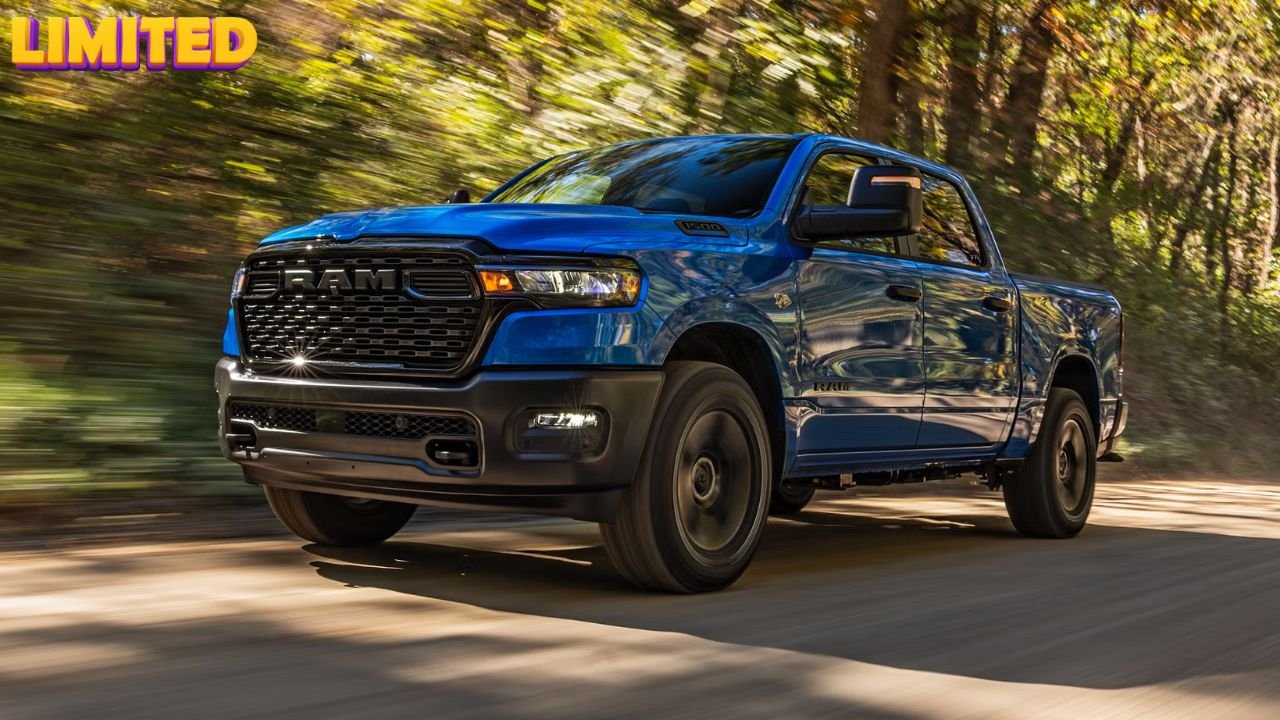
Ram 1500 V-8 loyalty runs deep among truck enthusiasts, but rising fuel costs, stricter emissions rules, and new turbo six‑cylinder engines have turned the classic “muscle truck” into a more complicated choice. The question today is whether choosing a V‑8 is still about real-world capability or more about image, nostalgia, and signaling membership in a certain enthusiast tribe.
What Made The Ram 1500 V-8 Iconic
For years the 5.7‑liter HEMI V‑8 defined the Ram 1500, delivering about 395 horsepower, 410 lb‑ft of torque, and towing capacities up to around 11,600–12,750 pounds depending on configuration. Drivers valued not only the numbers, but the instant throttle response, classic V‑8 exhaust note, and relaxed cruising feel that smaller engines struggled to match. In that era, checking the V‑8 box clearly signaled that the truck was built to work hard, haul, and tow, not just commute.
Performance Muscle In A Changing Lineup
The performance story peaked with the Ram 1500 TRX, using a 6.2‑liter supercharged V‑8 rated at about 702 horsepower and 650 lb‑ft of torque. This powertrain pushed a full‑size pickup from 0–60 mph in roughly 4.5 seconds, putting it in sports‑car territory and making it one of the wildest factory trucks ever sold. However, emissions regulations and a corporate pivot toward efficiency led Ram to end TRX production after the 2024 model year, with plans to bring back a V‑8 TRX variant for 2026 under tighter regulatory scrutiny.
Efficiency, Emissions And The New Sixes
At the same time, Ram’s strategy shifted heavily toward V‑6 and turbocharged six‑cylinder engines that deliver comparable or better real‑world performance with improved efficiency. The familiar 3.6‑liter Pentastar V‑6 with eTorque mild hybrid assistance offers about 305 horsepower with significantly better city and highway fuel economy than a comparable V‑8, often rated near 20 mpg city and 25–26 mpg highway in 1500 applications. New 3.0‑liter twin‑turbo “Hurricane” inline‑six engines now provide 420 or 540 horsepower in the Ram 1500, effectively replacing the HEMI V‑8 while delivering best‑in‑class available six‑cylinder output in some trims.
Sample Ram 1500 Engine Snapshot
| Engine | Horsepower | City MPG | Highway MPG | Notes |
|---|---|---|---|---|
| 3.6L Pentastar V‑6 eTorque | 305 | 20 | 25–26 | Best efficiency in lineup |
| 5.7L HEMI V‑8 (eTorque avail.) | 395 | 17–18 | 23 | Strong tow, classic V‑8 feel |
| 3.0L Hurricane I‑6 (std) | 420 | 19 | 24 | Balances power and economy |
| 3.0L Hurricane I‑6 High‑Output | 540 | 19 | 24 | Top gasoline performance |
These figures show how six‑cylinder options now rival or surpass older V‑8s in output while narrowing or beating them on fuel use, changing the cost‑benefit equation for many buyers.
Capability: Need Or Nostalgia?
For owners who regularly tow heavy trailers, large boats, or work equipment, the V‑8 still carries practical appeal because of its broad torque curve and proven durability under load. The 5.7‑liter HEMI V‑8 with eTorque historically offered the highest towing numbers in many Ram 1500 configurations, making it a rational choice for demanding duty cycles. Yet modern V‑6 and turbo‑six drivetrains now cover most real‑world needs, so a large share of V‑8 buyers use only a fraction of the power they pay for and carry the fuel and emissions penalty every day.
Virtue Signaling, But For Whom?
Virtue signaling is often linked to green credentials, but in the truck world it can also mean signaling loyalty to traditional powertrains and “real truck” culture. A Ram 1500 V‑8 telegraphs priorities like sound, heritage, and a no‑compromise stance on performance, even if a V‑6 or turbo six would handle the same tasks. In this sense, some V‑8 purchases are as much about identity as utility: the owner is saying something about values—mechanical simplicity, displacement, anti‑downsizing sentiment—rather than optimizing for efficiency.
Enthusiast Culture And Emotional Value
Enthusiasts also value elements that spec sheets cannot capture, such as the V‑8 exhaust note, the feel of low‑rpm torque, and the resale desirability of rare or short‑run engines like the TRX’s supercharged unit. Limited availability, including the gap between the 2024 TRX and the announced 2026 return, makes V‑8 models feel like future collectibles, further encouraging buyers who see their truck as hobby, investment, and lifestyle symbol in one package. For these buyers, dismissing the V‑8 choice as mere posturing misses the emotional and cultural weight that comes with it.
So, Muscle Truck Or Signaling?
In today’s market, the Ram 1500 V‑8 is both: a legitimate muscle truck for owners who use its capability and a form of enthusiast signaling for those drawn to its image more than its practical advantages. Where daily driving, moderate towing, and fuel costs dominate, the latest V‑6 and Hurricane I‑6 options make more objective sense. For drivers who prioritize sound, feel, and the thrill of a big‑displacement engine—especially in halo models like the TRX—the V‑8 remains a powerful statement that transcends spreadsheets, even as regulations and technology push the rest of the lineup toward smaller, more efficient powertrains.
SOURCE
FAQs
Q1: Is the HEMI V‑8 still offered in new Ram 1500 models?
For the latest Ram 1500 generation, mainstream trims have transitioned to V‑6 and twin‑turbo inline‑six engines, with V‑8 options restricted or phased out depending on model year and market.
Q2: Do the new Hurricane I‑6 engines really match V‑8 performance?
Yes, the 3.0‑liter Hurricane inline‑six produces 420 or 540 horsepower, exceeding the old 5.7‑liter HEMI V‑8 while returning comparable or better fuel economy.
Q3: Who should still consider a Ram 1500 V‑8?
Drivers who tow heavy loads frequently, value the traditional V‑8 driving feel, or want a halo performance truck like the TRX with a supercharged V‑8 remain the best fit for a Ram 1500 V‑8.