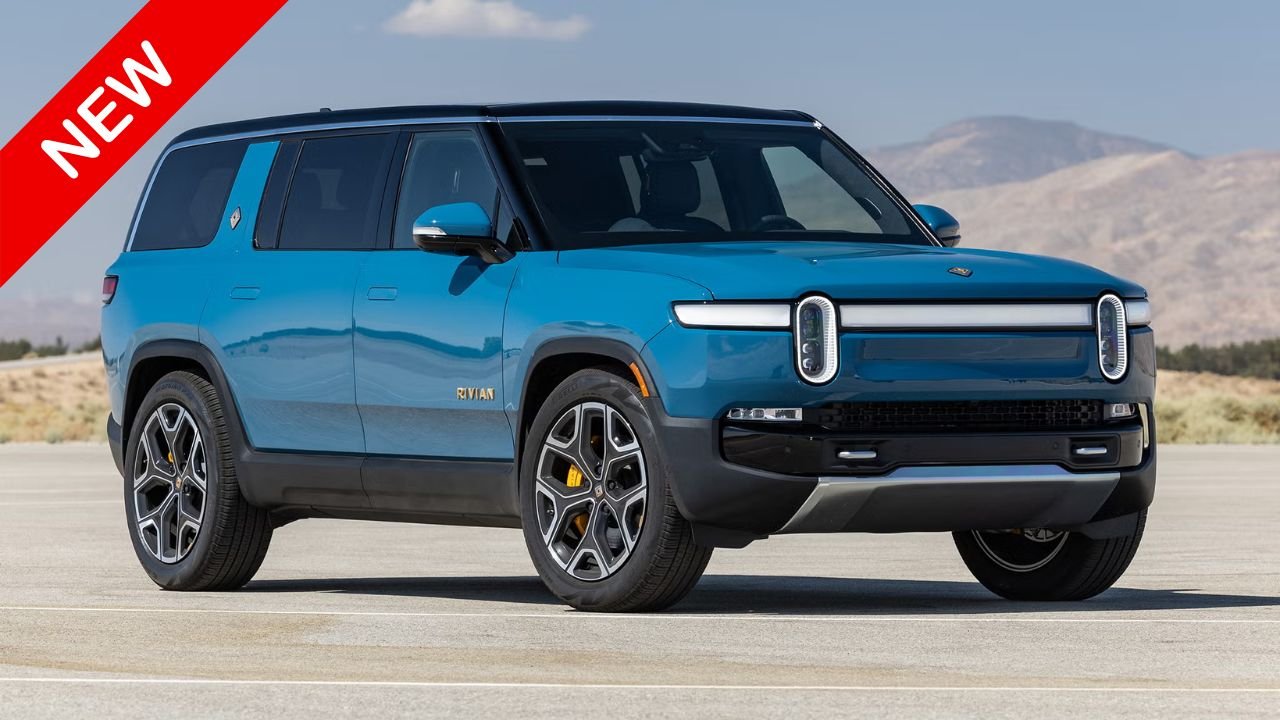
Rivian is shaking up the self-driving race with a new Autonomy+ package for its R1 and upcoming R2 vehicles that dramatically undercuts Tesla’s Full Self-Driving (FSD) pricing, while promising a long-term path toward higher levels of autonomy. This move combines custom AI hardware, scalable software, and aggressive pricing to reach a broader audience of EV buyers.
What Rivian Is Launching
Rivian’s new Autonomy+ package is an advanced driver-assistance and self-driving platform that will roll out first on second-generation R1 models and then on the more affordable R2. The system is designed as an evolving service, starting with hands-free driving on mapped roads and gradually adding more autonomous features via software updates.
At the heart of Autonomy+ is the Rivian Autonomy Platform, which links in-vehicle hardware with cloud-based training using a “large driving model” trained on massive real-world datasets. Rivian’s roadmap points toward “eyes-off” functionality and personal Level 4 autonomy later in the decade, although the company has not committed to a firm regulatory timeline.
Pricing That Undercuts Tesla
The most disruptive aspect of Rivian’s strategy is price. Autonomy+ costs a one-time fee of about 2,500 dollars or a subscription of roughly 49.99 dollars per month, and these options apply across the second-gen R1 lineup and future R2 models. Tesla’s FSD, by comparison, is priced around 8,000 dollars upfront or about 99 dollars per month, making Rivian’s solution less than half the cost in both purchase and subscription form.
This gap matters because self-driving capability has become one of the most expensive options on an EV, and many buyers hesitate to pay several thousand dollars on top of an already high vehicle price. By lowering the barrier, Rivian aims to boost “take rates” for autonomy features, turning software into a recurring revenue stream while appealing to cost-conscious customers.
Hardware: Custom Chips, Cameras, Radar and LiDAR
Rivian is not just cutting prices; it is also redesigning the hardware stack around a custom AI chip called RAP1, built on a 5-nanometer process and integrated into its third-generation Autonomy Compute Module (ACM3). This chip is optimized for high-intensity vision workloads, capable of processing billions of pixels per second and delivering roughly 1,600 sparse INT8 TOPS of compute for real-time perception and planning.
The sensor suite combines 11 cameras and multiple radar units, and Rivian plans to add LiDAR to the R2 platform for richer three-dimensional mapping and obstacle detection. This multi-modal design contrasts with Tesla’s camera-focused approach and aligns more with robo-taxi players like Waymo, which rely on LiDAR to improve redundancy and depth perception.
How Rivian’s Capability Compares
Today, Rivian’s production ADAS includes adaptive cruise control and lane-keeping, and the new Autonomy+ layer adds “Universal Hands-Free” driving on more than 3.5 million miles of roads across the United States and Canada. Tesla’s FSD offers similar point-to-point supervised autonomy on city streets and highways, but Rivian is positioning its system to grow from hands-free highway and arterial use to broader, more complex scenarios over time.
In the near term, Rivian’s lower price also reflects that its capabilities will initially be more limited than Tesla’s mature FSD feature set, particularly until ACM3 hardware and LiDAR are fully deployed on the R2. However, Rivian’s strategy emphasizes frequent over-the-air updates, a scalable software architecture, and a clear path to Level 4-style “personal autonomy” once hardware, software, and regulation all align.
Cost Gap at a Glance
| Feature | Rivian Autonomy+ (R1/R2) | Tesla Full Self-Driving (FSD) |
|---|---|---|
| One-time purchase price | ~2,500 dollars | ~8,000 dollars |
| Monthly subscription | ~49.99 dollars | ~99 dollars |
| Hands-free coverage (miles) | 3.5 million+ US/Canada roads | Highway and city streets network, details not fully disclosed publicly |
| Planned hardware stack | Custom RAP1 chip, ACM3, cameras, radar, LiDAR on R2 | Custom FSD computer, camera-only sensor suite |
Implications for Rivian R1 and R2 Buyers
For current and future R1 owners, Autonomy+ turns the truck and SUV into long-range touring tools that can handle large stretches of driving with minimal driver input, especially on well-marked roads. Rivian intends to expand these capabilities through over-the-air updates, so early adopters can see their vehicles gain features over time without hardware changes.
R2 buyers stand to gain even more as they will receive a more affordable vehicle—expected starting prices around the mid-40,000-dollar range—combined with next-generation autonomy hardware and LiDAR as the system matures toward higher levels of automation. This combination allows Rivian to target a broader market bracket, including buyers who previously considered autonomy a luxury reserved for high-end EVs.
Strategic Stakes in the EV Market
Autonomy+ is also a financial and strategic lever for Rivian. Lower pricing increases the likelihood that autonomy subscriptions become a recurring profit source, which investors see as critical for long-term margins in the EV sector. The company’s move toward custom silicon, zonal electrical architecture, and shared platforms across models is aimed at lowering manufacturing costs while keeping software-driven services at the center of its business model.
Rivian’s timing coincides with cooling EV demand and the phase-out of some incentives in the United States, making a strong software story even more important to differentiate its vehicles. By offering a cheaper yet ambitious autonomy package, Rivian not only pressures Tesla on pricing but also sends a signal that meaningful self-driving capability is no longer an ultra-premium add-on.
SOURCE
FAQs
Q1: When will Rivian Autonomy+ be available?
Autonomy+ is expected to launch in early 2026 on second-generation R1 models, with broader deployment as the R2 arrives.
Q2: Does Rivian’s system drive fully by itself today?
Current features focus on supervised hands-free driving on millions of mapped roads, with full “eyes-off” operation targeted for later this decade, subject to regulation and validation.
Q3: Will existing R1 owners be able to upgrade?
Second-generation R1 owners will be able to add Autonomy+ as a paid upgrade and receive ongoing software enhancements via over-the-air updates.