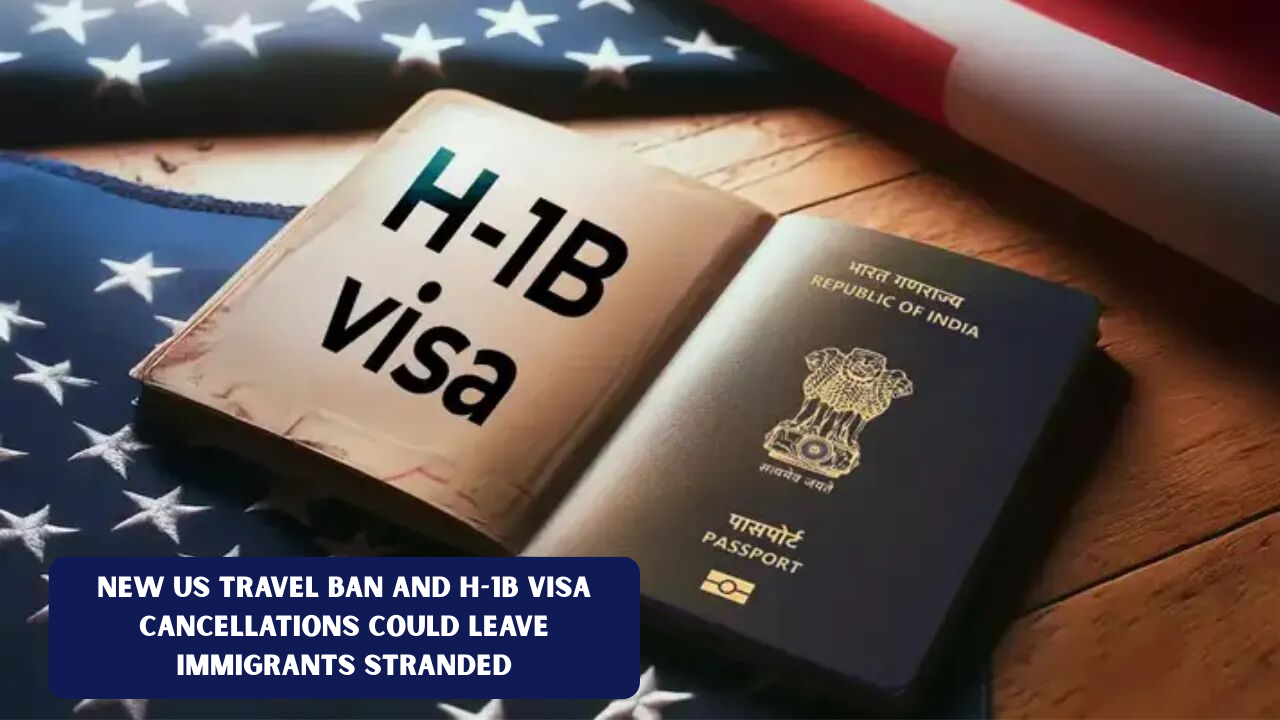
The landscape of American immigration has shifted dramatically as we approach 2026. A series of aggressive executive actions and procedural changes have created a high-stakes environment for foreign workers and families. On December 16, 2025, a new Presidential Proclamation was signed, significantly expanding the list of countries subject to travel restrictions. This “Expanded Travel and Immigration Ban” is set to take effect on January 1, 2026, and is poised to impact 39 countries. For H-1B visa holders—many of whom are the backbone of the U.S. technology sector—the combination of these bans and a sudden surge in visa appointment cancellations has created a crisis of “stranded” immigrants who find themselves stuck outside U.S. borders with no clear path home.
The Expansion of the Travel Ban
The new policy builds upon earlier restrictions from June 2025, categorized into “Full” and “Partial” entry bans. Under the full ban, nationals from 19 countries, including Afghanistan, Haiti, and Syria, are almost entirely prohibited from entering the U.S. as both immigrants and non-immigrants. Perhaps more concerning for the broader workforce is the partial ban affecting 20 additional nations, such as Nigeria, Tanzania, and Vietnam. While these partial bans primarily target visitor and student visas, they also grant consular officers the “broad discretion” to reduce the validity of other visas, including the H-1B and L-1 categories. This means even if a worker is not from a “fully banned” country, their ability to re-enter the U.S. could be limited to a single entry or a three-month window, making international travel a massive professional risk.
H-1B Visa Cancellations and the Social Media Vetting Hurdle
Beyond the geographic bans, a procedural shift in December 2025 has caused immediate chaos for thousands of Indian and Chinese professionals. The U.S. State Department recently rolled out an “enhanced online presence review,” requiring H-1B and H-4 applicants to make their social media accounts public for government scrutiny. Because this vetting process is time-consuming, consulates have been unable to keep up with their existing schedules. Consequently, thousands of appointments originally set for late December 2025 have been abruptly cancelled and pushed to mid-2026. For those who traveled home for weddings or holidays, this “administrative delay” means they are effectively locked out of their jobs and lives in the U.S. for six months or more.
Summary of 2025-2026 Immigration Restrictions
| Policy Change | Effective Date | Primary Impact |
| Expanded Travel Ban | January 1, 2026 | Covers 39 countries; full or partial entry suspension. |
| H-1B Registration Fee | September 2025 | Fee increased to $100,000 for new beneficiaries. |
| Social Media Vetting | December 15, 2025 | Mandatory public profile review; causes 6+ month delays. |
| Interview Waiver Rollback | September 2025 | Nearly all H-1B renewals now require in-person interviews. |
| Visa Revocations | Ongoing 2025 | Increased cancellations for minor/past traffic violations. |
The Human Cost of Strategic Delays
The impact of these policies is not just felt in corporate boardrooms but in living rooms. Many H-1B holders are high-skilled professionals who have lived in the United States for over a decade, own homes, and have children who are U.S. citizens. Reports from major consular hubs like Mumbai and Hyderabad describe a “nightmare scenario” where parents are separated from their children or forced to work remotely from overseas at odd hours, risking their employment status. Since an H-1B worker generally cannot remain outside the U.S. for extended periods without jeopardizing their “maintenance of status,” these long delays are causing a wave of “self-deportation” where individuals simply cannot afford to wait for a 2026 interview date.
Financial Barriers to Entry
Adding to the complexity is the staggering new cost of the H-1B program itself. As of late 2025, the registration fee for new H-1B petitions has been raised to $100,000 per beneficiary. This move was framed by the administration as a way to prioritize “high-wage” workers and discourage “outsourcing firms.” However, the practical effect has been a chilling of the labor market. Small startups and mid-sized firms can no longer afford to hire international talent, and even large tech giants are reconsidering their sponsorship programs. When combined with the travel bans, the message to the international community is clear: the path to working in the United States is becoming narrower and more expensive than ever before.
Navigating the New Reality
For immigrants currently in the U.S., the prevailing advice from legal experts is “do not travel.” The risk of an unannounced policy change or a sudden appointment cancellation is simply too high. Those who must travel should ensure their social media presence is “scrubbed” of any controversial content and be prepared for months of potential displacement. As the January 1 deadline approaches, we are seeing a rush of travelers attempting to re-enter the U.S. before the new Proclamation takes effect. For many, the American Dream is currently on hold, replaced by the uncertainty of a shifting legal landscape and a complex web of executive orders.
FAQs
Q1: Does the new travel ban apply to people already inside the U.S.?
Generally, no. The Presidential Proclamation typically applies to individuals who are outside the United States and do not have a valid visa on the effective date of January 1, 2026. However, if you leave the country after that date, you may face difficulty returning.
Q2: Why are H-1B visa appointments being rescheduled to 2026?
The delay is primarily due to the “social media vetting” policy implemented in December 2025. Consular offices require more time to review the digital footprints of applicants, leading to a reduction in the number of interviews they can conduct daily.
Q3: Can my existing H-1B visa be cancelled because of the new ban?
The Proclamation states that visas issued before the effective date will not be revoked pursuant to the ban itself. However, the State Department has increased “discretionary revocations” for other issues, such as old traffic violations or inconsistent social media data.
disclaimer
The content is intended for informational purposes only. you can check the officially sources our aim is to provide accurate information to all users.